
Reflections
Humour does not translate — why different cultures laugh at different things
Humour says a great deal about people, even more than politics or history.
Only when you live between two cultures do you realise how much humour differs from country to country. What is completely normal and funny to one people can be strange or incomprehensible to another.
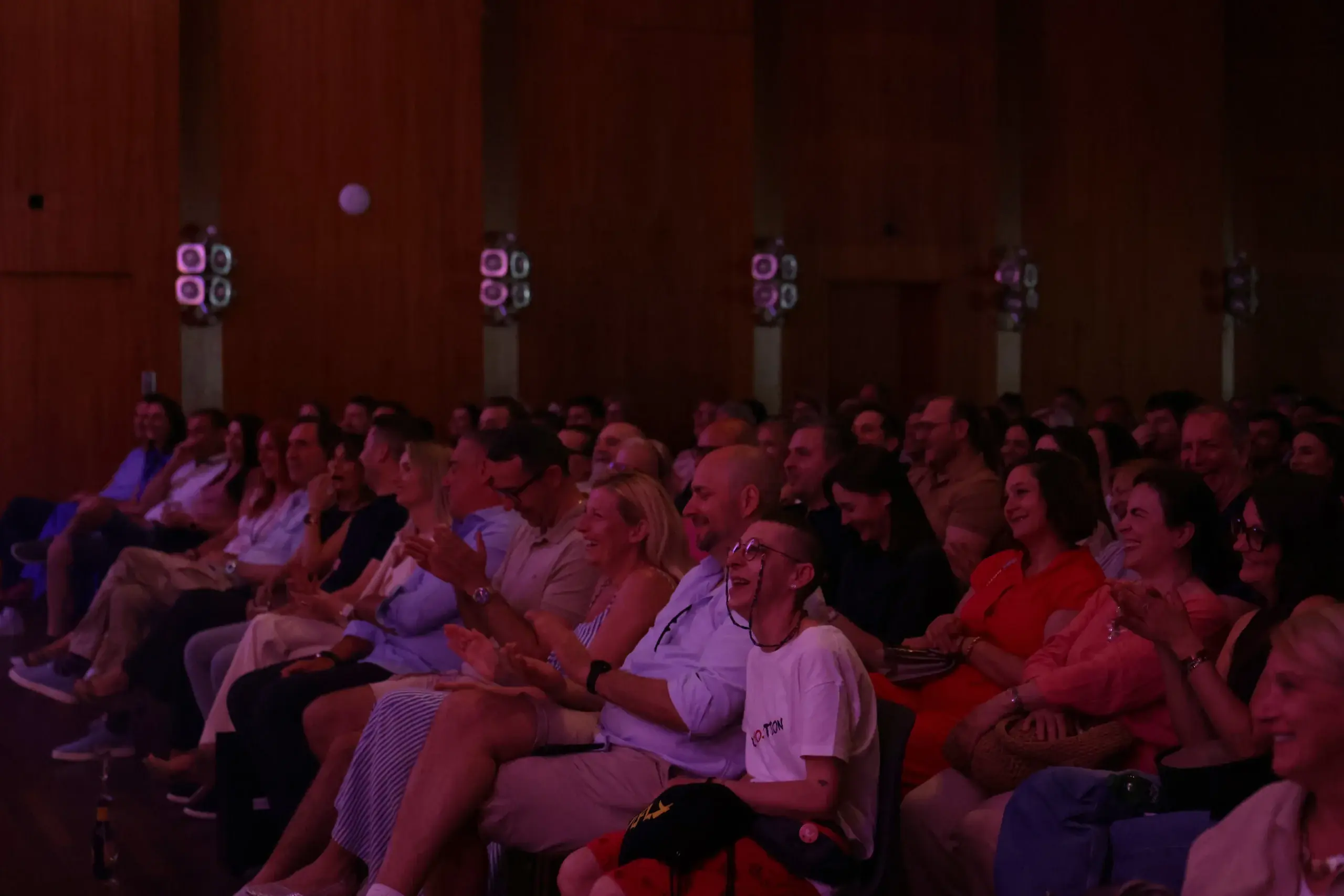
Balkan humour is often loud, spontaneous, emotional, full of irony, and sometimes even dark. We tell our stories through humour, we laugh at difficult things, and sometimes it is precisely through a joke that we survive what is not easy (just think of the laughter at funerals). Perhaps that is exactly why the audience at our performances reacts so strongly — it understands the nuances without any explanation.
A single sentence, a single look, or the way an actor delivers a line is enough for the whole hall to explode with laughter.
That is hard to translate — our humour is not just text. It comes from a mentality, from experience, and from shared references.
I also find it fascinating how much humour connects people in the diaspora. At our events I often see people meeting for the very first time who, only a few minutes later, are talking as if they have known each other for years. I think that is because humour tears down the distance immediately.
That is why I believe good comedies have a special value in the diaspora — not only because they make us laugh, but because they briefly return us to that feeling of closeness of ours.
— Evica
Our stories
Why people from the Balkans leave so often, yet find it so hard to stop thinking about it
Evica Marković1 October 2026When you have lived away from the country you came from for a long time, your relationship with it becomes more complicated than you imagined at the start. Distance sometimes sharpens the view and sometimes clouds it with nostalgia…
Read moreEleven days when Zurich lives through film
Evica Marković23 September 2026Every autumn the area around Sechseläutenplatz changes almost overnight. Festival signs appear, queues form in front of the cinemas, around town you hear more and more conversations about films nobody has had the chance to see yet, and people who might otherwise never meet end up in the same auditorium because they picked the same title from the programme…
Read moreWhen design steps out onto the streets of Zurich
Evica Marković17 September 2026There are things we use every day and almost never think about. The chair we sit on, the glass we drink water from, the sign at the stop that tells us where to go, the light in a restaurant that keeps us there longer than we planned, or a poster on the street that makes us stop…
Read more

FAQ
Frequently asked questions.
HELSE is a Swiss cultural association that fosters exchange between Switzerland and Serbia. Through theatre, film, music, stand-up and children's workshops we build cultural bridges — alive, inspiring and open to everyone.
Our programme is diverse: theatre performances, film screenings, stand-up comedy, concerts, readings, seminars and children's workshops.
Events run year-round — the current schedule lives in the Events section.
Tickets are sold online via each event's page and, for some programmes, at the door before the show. HELSE members receive discounts on selected events.
Membership is open to anyone who wants to support the association. The annual fee is CHF 70, with reduced rates for students and pensioners.
Sign up via the Membership page — for any additional questions, write to info@helse.ch.