
On school bags, the language we carry from home, and what stays with children much longer than the timetable
The first day of school between two languages
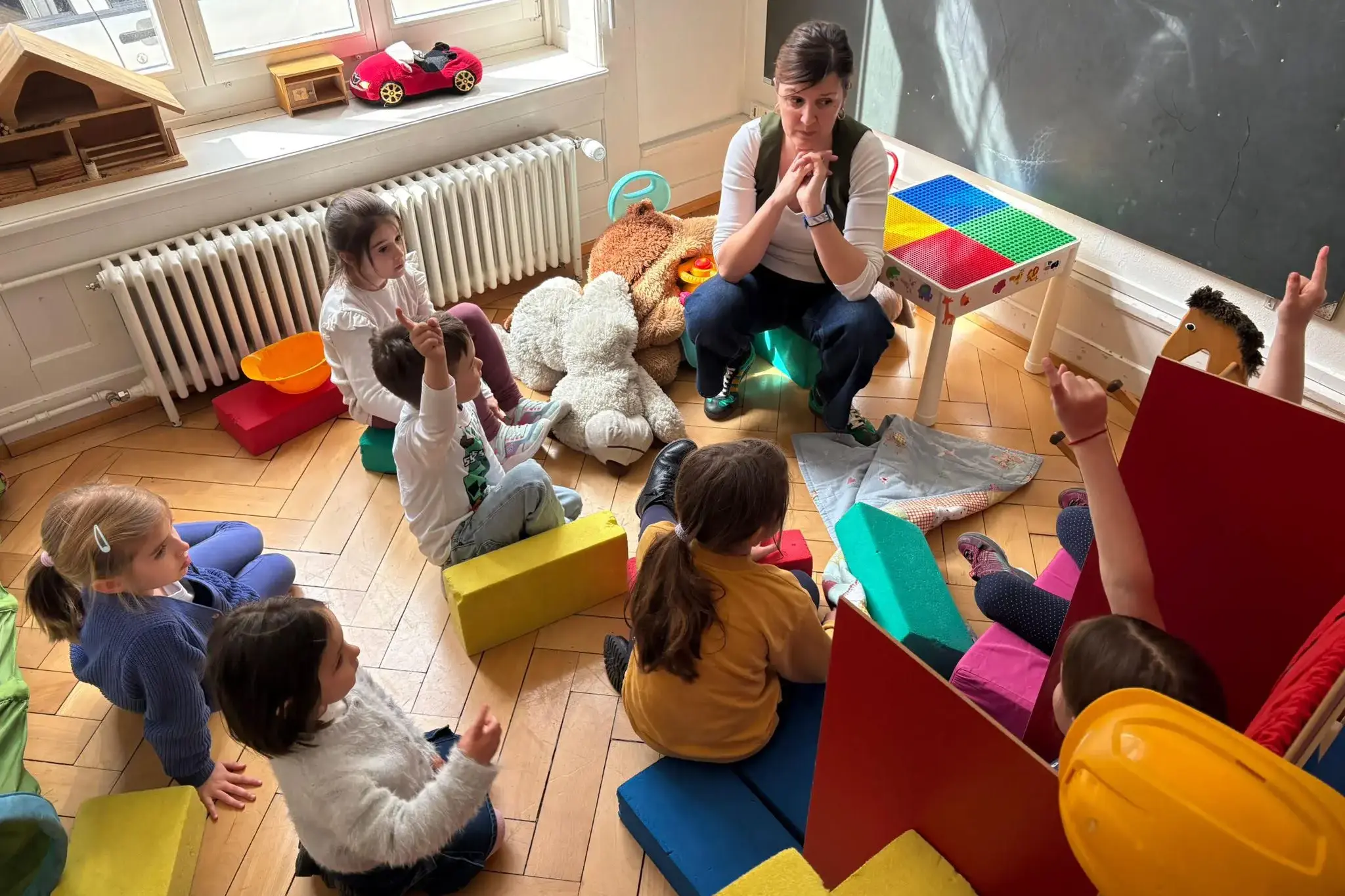
Photo: Škola Zmaj
At the end of August, a familiar moment happens in Zurich. The city's summer rhythm has not quite faded, the days are still long, the terraces full — and then, one Monday, new school bags appear at the tram stops, slightly too big for small backs, parents trying to look more relaxed than they feel, and children setting out for the first time on a path that will become completely ordinary to them in the years ahead. The school year in the canton of Zurich began on 17 August this year, so I would like to wish all our schoolchildren — those who have just started first grade and those who already know the school bells well — a heartfelt happy start.
The start of school always reminds me how much the life of a family changes when a child steps into their own new world. Suddenly a timetable moves into the house; there is talk of teachers and friends, of homework, sport, school trips and everything the child will very soon begin to experience as their own life, separate from the life of their parents. For families living between two languages in Switzerland, one more question joins all of this — a question often spoken about only once we realise that the child has started answering faster in German than in the language they hear at home.
I find this especially interesting because in diaspora families the mother tongue is often looked at through concrete knowledge: how correctly the child speaks, whether they can read Cyrillic or Latin script, whether they make grammatical mistakes and how many words they know. It seems to me far more important to think about what that language will one day make possible for the child. It lets them talk to their grandmother and grandfather without a translator, understand the family joke, visit relatives without feeling like a guest, read a book or watch a play in the language their parents grew up in. A language holds tone, humour, tenderness and a whole family world that is very hard to translate.
Children growing up in Switzerland have the great privilege of learning very early what it looks like to live with several languages. In the schoolyard they can hear German, Swiss German, Italian, Albanian, Portuguese, Serbian, Croatian, Bosnian and many other languages. That is their everyday life, and often much more natural than adults imagine. Still, the language spoken at home needs a little more care, because it does not have the same support of school, textbooks, friends and everyday surroundings. If we reduce it to parental correction and fear of mistakes, it easily becomes just another (unpleasant) obligation. If we connect it with people, stories, music, books, travel and friendship, the child gets a reason to keep it and develop it.
That is why I like initiatives that give children space to experience our language outside the family kitchen. The Zmaj school in Zurich is exactly one of those places. Parents who want their children to nurture the Serbian language and the bond with the culture their family comes from would do well to take a look at what it offers. What matters most to me is that the child sees they are not the only one who speaks differently at home than at school. Suddenly that language is also the language of other children, of play, friendship and shared experience — and that changes its place in the child's life.
After more than thirty years of living in Switzerland, I often think about what integration really means when a person spends most of their adult life here. To me it has never meant giving up one world in order to belong to the other. Much closer to me is the idea that, over time, a person learns to carry both within themselves, with all their differences. Switzerland has taught me a great deal about organisation, responsibility, community and respect for diversity, while the language I grew up in has remained the place where some emotions still find the right word most easily. I am sure that many of my peers who want the same for their children will agree with me.
So at the start of this school year, I would wish parents a little less worry about perfection, and children plenty of curiosity. There will be wrong grammatical cases, German words dropped in where we least expect them, and answers in German to questions asked in Serbian. All of that is part of life between languages. What matters is that the conversation stays alive and that the child ties to that language the feeling that one additional world belongs to them.

— Evica
Our stories
Why people from the Balkans leave so often, yet find it so hard to stop thinking about it
Evica Marković1 October 2026When you have lived away from the country you came from for a long time, your relationship with it becomes more complicated than you imagined at the start. Distance sometimes sharpens the view and sometimes clouds it with nostalgia…
Read moreEleven days when Zurich lives through film
Evica Marković23 September 2026Every autumn the area around Sechseläutenplatz changes almost overnight. Festival signs appear, queues form in front of the cinemas, around town you hear more and more conversations about films nobody has had the chance to see yet, and people who might otherwise never meet end up in the same auditorium because they picked the same title from the programme…
Read moreWhen design steps out onto the streets of Zurich
Evica Marković17 September 2026There are things we use every day and almost never think about. The chair we sit on, the glass we drink water from, the sign at the stop that tells us where to go, the light in a restaurant that keeps us there longer than we planned, or a poster on the street that makes us stop…
Read more

FAQ
Frequently asked questions.
HELSE is a Swiss cultural association that fosters exchange between Switzerland and Serbia. Through theatre, film, music, stand-up and children's workshops we build cultural bridges — alive, inspiring and open to everyone.
Our programme is diverse: theatre performances, film screenings, stand-up comedy, concerts, readings, seminars and children's workshops.
Events run year-round — the current schedule lives in the Events section.
Tickets are sold online via each event's page and, for some programmes, at the door before the show. HELSE members receive discounts on selected events.
Membership is open to anyone who wants to support the association. The annual fee is CHF 70, with reduced rates for students and pensioners.
Sign up via the Membership page — for any additional questions, write to info@helse.ch.